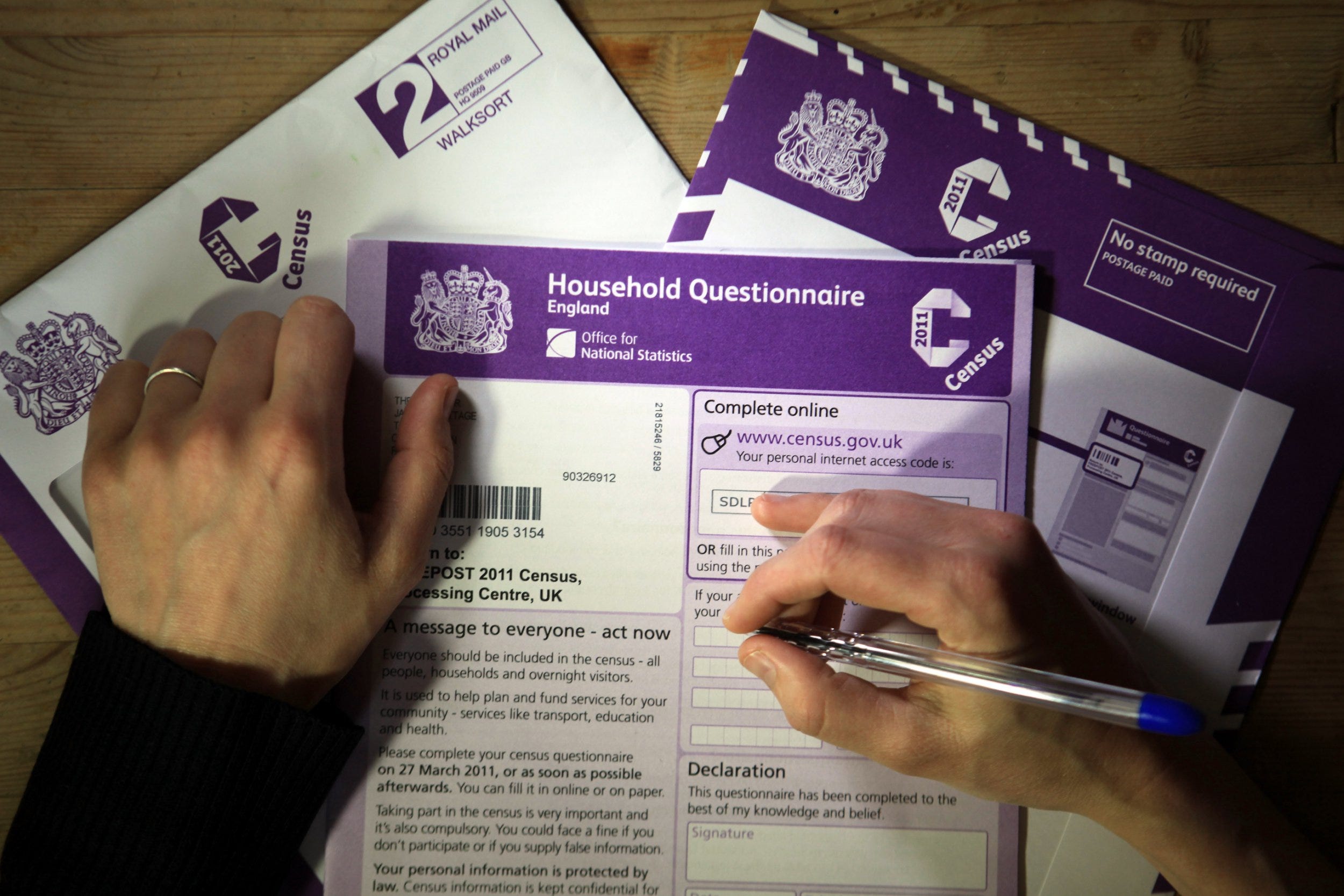
Five and a half years might seem like a long enough time to plan a census, especially since we’ve been doing them (almost) every ten years for over two centuries. But statisticians don’t like to be in a rush. The census is the oil tanker of surveys – the biggest and heaviest in its class – and working it up to full speed takes a huge amount of effort and patience. Until a change of tack in June of this year, it had also looked very likely that we wouldn’t be doing a full 2031 census at all.
So with half the decade gone since the previous census, and many of its results now unusably out-of-date, the ONS has officially on the count for 2031. Its first order of business has been to launch a consultation.
Asking the public for input into the census process is nothing new, and yet it’s also extraordinary when you think about the opportunity here. Because what the ONS is asking for isn’t just public feedback on what’s in the census at the moment – they’re also seeking views on what additional questions could go in.
When the first UK census was carried out in 1801, it asked for essentially 2 pieces of information for each household unit: the number of people in it, and their occupations. On this latter question, people were given the option of self-selecting into ‘agriculture,’ ‘trade and handicraft’ or ‘other.’ Most women ended up in the ‘other’ category which was later, at times, depressingly referred to as ‘the residue.’
As the survey was refined over the next four decades, it came to ask for more detail about each individual household member, including sex, age, relation to the head of the household, place of birth, whether born in ‘foreign parts’, specific occupation, and place of work. By the turn of the twentieth century, the census was also recording some rudimentary health data, namely whether people in the household were ‘(1) Deaf-and-Dumb (2) Blind (3) Lunatic, and/or (4) Imbecile, feebleminded.’
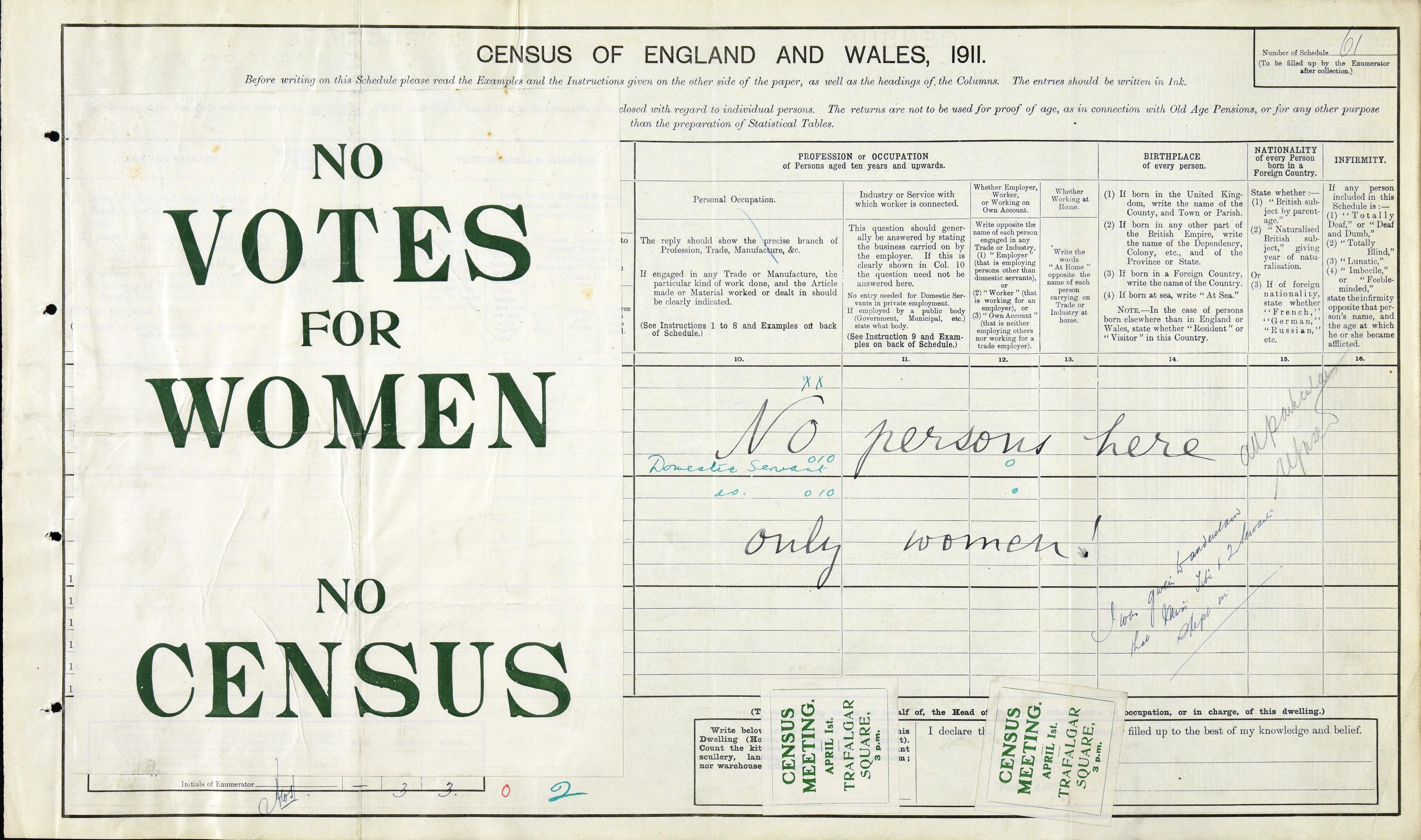
The 1911 census was where the line of questioning started to turn very personal, with a new section on ‘particulars of marriage,’ which asked about the number of living and deceased children resulting from each marriage. It was a strangely intimate line of questioning, which some historians now see as having been inspired by the new ‘science’ of eugenics which was having a moment. It also happened to be the census that was boycotted by the Suffragettes, who called for women to withhold their information until counted as full and equal citizens. The personal was political.
The slightly lurid ‘particulars of marriage’ section had been taken out by 1931, although it has been much more common for questions to be added into the census than removed. The latest round of major additions has come since 1991, when ethnicity was finally introduced after real trepidation on the part of the statistics authorities, followed by religion (2001) and sexual orientation and gender identity (2021).
I think of these new questions as signs of a shift in what we find important to record, with the new focus less on material conditions and more on identities. And the fact that campaigners fought hard to get those questions onto the census tells us a lot about what the census has become: not just a top-down, box-ticking exercise but, for some, a cherished, symbolic moment to make a mark.
In 2021, the England and Wales census consisted of 14 household questions and up to 50 questions for each individual. Does it need more? And if it were to have more, what should they be?
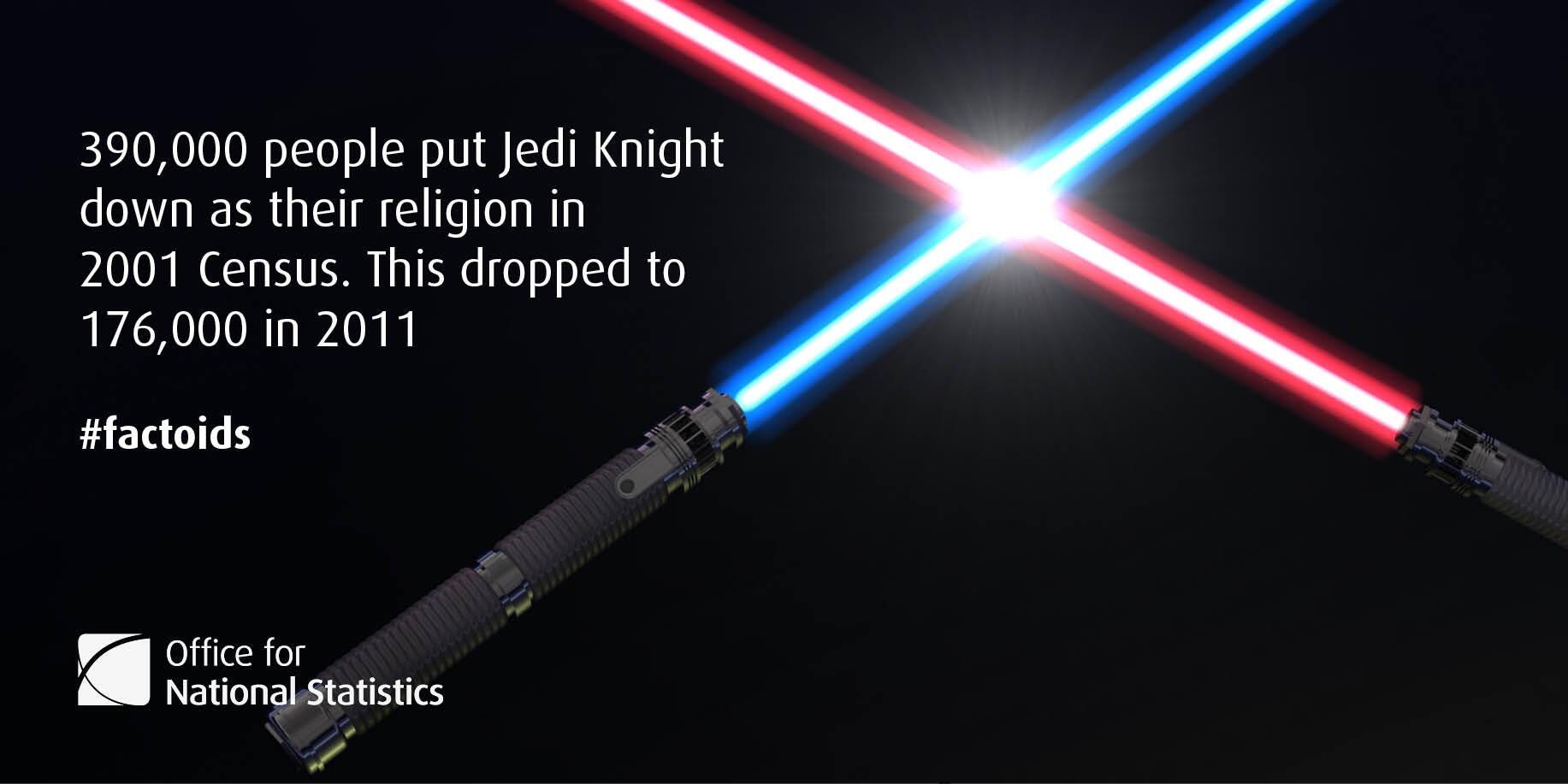
The ONS has two suggestions which you can comment on in the consultation: income and type of health condition, impairment or disability. They’re not terribly exciting, but that information would be useful to have (although in the case of income, also potentially quite difficult to report for people with multiple and/or variable income streams). For the rest, the ONS invites members of the public to suggest up to *five* new topics that they could ask about. I do wonder what chaos this might unleash. Let’s never forget that when the census first offered an open-response option for religion, so many people wrote in “Jedi” that it became the fourth largest religion in England and Wales.
At a recent book event I did, an audience member asked me the question, “If you could add a question to the census, what would it be?” I didn’t have an answer prepared, and mumbled something about goths and emos (you’ll have to read Sum of Us for more context on that one) but I’ve been thinking about it since.
On the one hand, I think about the type of data that would fill gaps and clarify statistics in certain areas. Asking about immigration status, for example, could help fill in some blanks about migrants’ employment and socio-economic outcomes. When you really start thinking about it though, there are a lot of reasons why that data might not end up being accurate, not to mention the ethical considerations that would have to be very carefully thought through. It would also be great to know how many children are home schooled, how many people have a criminal conviction, and how many pets there are (dogs per square kilometre not quite giving us the full picture) but, again, there are difficulties with asking about all of these that make me wonder if any would really be worth the trouble.
The other line of thinking in my head asks why not embrace the potential of the census as a gigantic form of market research. The possibilities are pretty much endless. We could use it as a kind of ten-yearly opportunity for referendum-style questions on issues we’d like to settle once and for all. Should we bring back military service? Do we want more nuclear power stations? Should we be allowed to marry an AI companion? Is it ‘tea’ or ‘dinner’?
Census questioning has been travelling further towards the personal over time and at this point we need to ask ourselves if the logical continuation is in that same direction, or whether it’s in another. What’s more personal than religion, sexual orientation and gender identity? Use of hard drugs? Whether in a non-monogamous relationship? Something that’s not quite as intimate but still subjective and identity-related would be to ask about people’s identification with social class (i.e. working, middle, or upper). We could also take things in a more self-reflective direction and ask people’s feelings and intentions. Do we feel financially secure? How hopeful are we about the future? Do we have a desire to migrate?
I’m very curious to hear what others think. If you could add anything to the census, what would it be?
And you can fill out that ONS census topic consultation here.
Originally published on Substack: https://georginasturge.substack.com/p/if-you-could-poll-everyone-in-the